Guide · Skin
Sunscreen for Indian skin: what actually matters
Updated October 2026 · 9 products reviewed · Sources at the end
The short answer
Choose a broad-spectrum sunscreen with SPF 30 or more and PA+++ or PA++++, in a texture you will wear every day, and apply it generously: at least a teaspoon for the face, reapplied every two hours outdoors and after sweating. On Indian skin, UVA and visible light drive much of the tanning and pigmentation, so the PA grade matters as much as the SPF, and a tinted sunscreen with iron oxides helps with melasma. Of the nine we have reviewed, the best are built on newer filters such as Tinosorb S and Uvinul A Plus rather than avobenzone and octinoxate.
What SPF and PA actually measure
SPF is a sunburn test. The product is spread on skin at 2 mg/cm², the skin is given increasing doses of simulated sunlight, and the SPF is the dose that just causes redness with the sunscreen divided by the dose that does so without it. Sunburn is driven mainly by UVB, so SPF tells you mostly about UVB.
In theory, SPF 30 cuts the burning dose thirtyfold, which works out at about 97% of UVB filtered. SPF 50 filters slightly more. No sunscreen blocks all of it.
UVA is the larger share, about 95% of the UV that reaches your skin. It goes deeper, is a main driver of long-term skin ageing and causes the immediate darkening you see after time in the sun. Together with UVB, it also builds the slower tan that follows.
PA is the grade for UVA. It was developed in Japan and runs from PA+ to PA++++, the highest. It is based on how well a product prevents persistent pigment darkening, the browning that UVA causes.
The two numbers do not move together. In a 2026 study of 38 sunscreens labelled SPF 50 or 50+, sold across Europe, Latin America, Oceania and Asia, measured UVA protection ranged from 3.6 to 46.6, and about a third fell short of the EU recommendation that UVA protection be at least a third of the SPF. The study was run with researchers from L’Oréal and La Roche-Posay, which is worth knowing, but the spread is the point: a high SPF does not guarantee good UVA cover.
So look for SPF 30 or higher and broad-spectrum protection, as the American Academy of Dermatology advises, plus PA+++ or better. If tanning or pigmentation is your main worry, go for PA++++. All nine sunscreens we have reviewed are SPF 40 or higher, and seven carry PA++++.
The filters that matter
A sunscreen is only as good as its UV filters, and the ones on Indian labels fall into two groups. The newer ones, Tinosorb S and Tinosorb M, are broad-spectrum (Tinosorb S is notably stable in sunlight) and are often paired with Uvinul A Plus for UVA and Uvinul T 150 for UVB. The older trio of avobenzone, octinoxate and octocrylene still works but needs careful formulating, because avobenzone and octinoxate break down in sunlight. You will also find Mexoryl SX (a UVA filter), ensulizole and octisalate (both UVB filters) and Tinosorb A2B in some of the formulas we have reviewed. The strengths below are legal maximums in the EU, with the US limit where it differs; none of the nine ingredient lists we reviewed gives filter percentages.
| Ingredient | What it does | Strength | Worth knowing |
|---|---|---|---|
| Tinosorb S | Broad-spectrum: absorbs UVB and UVA, with peaks at 310 and 340 nm | Up to 10% (EU); up to 6% (US) | Stays stable in sunlight, unlike avobenzone; in June 2026 the US approved it as its first new sunscreen filter since 1999. |
| Tinosorb M | Broad-spectrum UVB and UVA filter, used as fine particles | Up to 10% (EU limit) | A large molecule that sits on the skin: in lab tests about 0.01% of the applied dose passed through human skin. |
| Uvinul A Plus | UVA filter | Up to 10% (EU limit) | Takes avobenzone's place in the newer formulas we have reviewed, usually paired with Uvinul T 150 for UVB. |
| Uvinul T 150 | UVB filter | Up to 5% (EU limit) | Covers UVB only, so it needs a UVA partner such as Uvinul A Plus. |
| Avobenzone | UVA filter, the main one in older formulas | Up to 5% (EU); up to 3% (US) | Breaks down in sunlight unless the formula stabilises it, for example with octocrylene. |
| Octocrylene | Absorbs UVB and short UVA; stabilises avobenzone | Up to 10% (EU and US) | A rare allergen, though photoallergy is more likely in people already sensitised to the painkiller ketoprofen. |
| Octinoxate | UVB filter, long used in older formulas | Up to 10% (EU); up to 7.5% (US) | Not stable in sunlight, and Hawaii bans the sale of sunscreens containing it over concerns for coral reefs. |
| Zinc oxide | Mineral filter covering UVB and UVA | Up to 25% (EU and US) | Rarely causes reactions, so dermatologists favour it for sensitive skin, but it can leave a white cast on deeper skin tones. |
| Titanium dioxide | Mineral filter for UVB and the shorter UVA wavelengths | Up to 25% (EU and US) | Needs a partner filter for long UVA; nano grades reduce the white cast but give up protection against visible light. |
The sunscreens we have reviewed, ranked
Every sunscreen we have reviewed, ranked by Isha’s rating, with the UV filters it carries and its price at MRP.
| # | Product | Isha's rating | Actives | MRP | Best for |
|---|---|---|---|---|---|
| 1 | Dot & Key Vitamin C + E Super Bright Sunscreen SPF 50+ PA++++ | 4.6/5 | Uvinul A Plus, Uvinul T 150, Tinosorb S, Titanium Dioxide, Tinosorb M | ₹445₹8.90/g | Sensitive skin; ingredient-conscious users; daily SPF for any skin type |
| 2 | Deconstruct Gel Sunscreen SPF 50 PA++++ | 4.5/5 | Uvinul A Plus, Uvinul T 150, Tinosorb S, Tinosorb M, Octisalate | ₹399₹7.98/g | Daily wear for oily/combination skin; ingredient-conscious users avoiding older filters |
| 3 | Foxtale Glow Sunscreen SPF 50 PA++++ With Vitamin C & Niacinamide | 4.4/5 | Tinosorb A2B, Uvinul A Plus, Uvinul T 150 | ₹375₹7.50/g | Daily wear for oily/combination skin; ingredient-conscious users on a budget |
| 4 | Dr. Sheth's Ceramide & Vitamin C Sunscreen SPF 50+ PA++++ | 4.1/5 | Avobenzone, Mexoryl SX, Ensulizole, Octinoxate, Octisalate, Tinosorb M, Zinc Oxide | ₹499₹9.98/g | Sensitive, dry, or barrier-compromised skin; post-procedure recovery |
| 5 | Re'equil Oxybenzone & OMC Free Sunscreen SPF 50 PA+++ | 4.0/5 | Octocrylene, Tinosorb S, Tinosorb A2B, Octisalate | ₹395₹7.90/g | Users avoiding oxybenzone, octinoxate and avobenzone; daily wear |
| 6 | Minimalist SPF 50 PA++++ Sunscreen With Multi-Vitamin | 3.9/5 | Octocrylene, Avobenzone, Titanium Dioxide, Uvinul T 150 | ₹399₹7.98/g | Daily wear for oily/combination skin; users wanting added niacinamide |
| 7 | The Derma Co. 1% Hyaluronic Sunscreen Aqua Gel SPF 50 PA++++ | 3.7/5 | Avobenzone, Mexoryl SX, Ensulizole, Octinoxate, Tinosorb M, Octisalate | ₹499₹9.98/g | Combination/normal skin wanting a hydrating daily SPF |
| 8 | Aqualogica Glow+ Dewy Sunscreen SPF 50+ PA++++ | 3.6/5 | Avobenzone, Mexoryl SX, Octinoxate, Tinosorb M, Ensulizole, Octisalate | ₹449₹8.98/g | Normal/dry skin wanting a hydrating, dewy daily SPF |
| 9 | La Shield Mineral Sunscreen Gel SPF 40 PA+++ | 2.9/5 | Octinoxate, Uvinul A Plus, Tinosorb S, Titanium Dioxide | ₹850₹17.00/g | Dermatologist-recommended use cases; users who specifically tolerate it well |
Dot & Key (4.6), Deconstruct (4.5) and Foxtale (4.4) come out on top: each builds its protection on newer-generation filters with no avobenzone, octinoxate or octocrylene, at ₹375–₹445 for 50 g. Lower down, the most common trade-off is octinoxate, and La Shield's 'Mineral' gel turns out to be a hybrid at ₹850. We have not yet reviewed a zinc-oxide-only mineral sunscreen or a tinted one with iron oxides, the type that matters most for melasma.
How much to apply, and when
The SPF on the label assumes 2 mg/cm². On average, people apply about a quarter of that, around 0.5 mg/cm², so they never get the number on the tube. With high-SPF products, protection falls away even faster than the amount does.
- Face: at least a teaspoon. The American Academy of Dermatology likens it to a strip along the length of your index and middle fingers, the “two-finger rule”.
- Don’t skip the edges: the neck, ears and temples are the areas most often missed.
- Body: about 30 ml, a shot glass, for skin not covered by clothing.
- A quick check: if one 50 g tube lasts you three months of daily use, you are applying well under the tested amount.
- Timing: make it the last step of your morning skincare, before makeup, and put it on before you go out. The AAD suggests about 15 minutes ahead.
- Long days outside: a second coat soon after you step out makes up for a thin first one.
- Reapplying outdoors: about every two hours, and straight after swimming, heavy sweating or towelling off. In an Indian summer, count heavy sweat as a reason to reapply.
The two-hour rule is for time outdoors. The Indian Sunscreen Forum points out that it exists mainly to make up for under-application and for sunscreen lost to water, sweat and rubbing. If you applied the full amount and nothing has taken it off, the forum does not consider reapplying necessary within eight hours.
Sunscreen is one layer of protection, not a licence to stay out longer. In the midday sun, shade, a hat and covering up come first.
Chemical, mineral or hybrid?
Chemical filters, also called organic filters, absorb UV and release it as heat. “Organic” here means carbon-based, not natural.
Mineral filters are zinc oxide and titanium dioxide. They are often described as a shield that bounces sunlight off the skin, but they also protect mainly by absorbing UV. What they reflect is visible light, and that is where the white cast comes from. Nano or micronised grades shrink the cast, but they also give up most of that visible-light protection.
Mineral filters are inert and rarely trigger allergic or photoallergic reactions. That is why dermatologists recommend them for sensitive skin. The Indian Sunscreen Forum also prefers them for children over six months and during pregnancy, and advises keeping babies under six months out of direct sun rather than putting sunscreen on them. The trade-offs are a white cast on medium and deeper skin, a thicker feel and often weaker water resistance.
Hybrids combine the two. Of the nine we have reviewed, five use chemical filters only and four are hybrids; none is mineral-only. Labels can mislead. La Shield’s “Mineral” gel contains octinoxate, Uvinul A Plus and Tinosorb S alongside titanium dioxide. Dr. Sheth’s lists zinc oxide last, after its preservatives and antioxidants, so it is likely a small amount.
For most people, the more useful distinction is between newer and older chemical filters. Avobenzone degrades in sunlight unless it is stabilised, for example with octocrylene, and octinoxate is also unstable. Tinosorb S stays stable after UV exposure. Tinosorb S and Tinosorb M are large molecules that sit on top of the skin, and very little Tinosorb M was absorbed in lab tests.
In US FDA studies, avobenzone, octocrylene and Mexoryl SX reached the bloodstream above the FDA’s 0.5 ng/mL threshold, and findings like these led the FDA to require further safety testing. Reviewers stress that the evidence calls for further study. It does not suggest that people should stop using sunscreen.
Sunscreen on Indian skin: white cast, tanning and pigmentation
White cast is a real reason people with medium and deeper skin give up on sunscreen: dermatologists writing on the 2026 US approval of Tinosorb S note that mineral residue remains a barrier to use for darker skin tones. Formulas built only on chemical filters avoid the problem, and our review of the Deconstruct gel, which has no mineral filter, notes no white cast.
Tanning is the skin’s response to UV. UVA causes the immediate darkening, and UVA and UVB together build the delayed tan. A high SPF alone will not prevent it. The PA grade matters, and so does using enough.
Visible light is the part most sunscreen advice leaves out. On darker skin, it causes pigmentation that is more intense and lasts longer than pigmentation from long-wave UVA, and the effect is most persistent in Fitzpatrick skin types IV to VI. Ordinary broad-spectrum sunscreens, including nano mineral ones, do not block visible light well. To do that, a sunscreen has to be visible on the skin. Tinted sunscreens manage it with iron oxides and pigment-grade titanium dioxide.
That matters most for melasma. Studies have found that broad-spectrum sunscreens with iron oxide improve melasma more than UV filters alone. The Indian Sunscreen Forum recommends SPF 30 or more with UVA, UVB and visible-light cover for melasma, applied generously and reapplied, indoors as well.
Post-inflammatory hyperpigmentation, the dark marks left after acne, is more common on darker skin, and both UV and visible light make it worse. Daily sunscreen is part of treating it, not an extra.
None of the nine sunscreens we have reviewed is tinted. If pigmentation is your main concern, use a well-rated sunscreen every day and look for a tinted one that lists iron oxides in a shade close to yours. Melasma that does not settle is worth taking to a dermatologist.
You do not need to spend more for good protection. Our three highest-rated sunscreens cost ₹375 to ₹445 at MRP for 50 g, while the most expensive one we have reviewed, La Shield at ₹850, rates lowest.
Questions people ask
Do I need sunscreen indoors?
If you sit near a window, yes. Window glass blocks UVB but lets UVA through, and UVA darkens pigment and ages skin. If you have melasma, the Indian Sunscreen Forum advises wearing it indoors as well.
Is SPF 50 much better than SPF 30?
Only slightly, at the amount used in testing: SPF 30 blocks about 97% of UVB, and higher numbers block a little more. The stronger case for SPF 50 is that most people apply only a fraction of the test amount, and a higher SPF makes up for some of that. It does not let you stay out longer without reapplying.
Does the SPF in my moisturiser or foundation count?
Only if you apply it as thickly as a sunscreen, because the SPF on any product is measured at 2 mg/cm². If you use a normal thin layer, wear sunscreen underneath and count the SPF in your makeup as a top-up, not as your protection.
Do I need sunscreen if I have dark skin?
Yes. Post-inflammatory hyperpigmentation, the dark marks left by acne or irritation, is more common on darker skin and is made worse by UV and visible light, and visible light darkens deeper skin tones in particular. Skin cancer can also affect any skin tone.
Is mineral sunscreen better for sensitive skin?
Usually. Zinc oxide and titanium dioxide are inert and rarely cause allergic or photoallergic reactions, which is why dermatologists recommend them for sensitive skin, ideally fragrance-free. Check the filter list, though: La Shield's 'Mineral' gel also contains octinoxate, Uvinul A Plus and Tinosorb S, and among our top three, Foxtale lists fragrance while Dot & Key and Deconstruct do not.
Will sunscreen break me out or leave a white cast?
For oily or acne-prone skin, the Indian Sunscreen Forum suggests oil-free gels, light lotions or silicone 'dry-touch' formulas; of the sunscreens we suggest for oily skin, Deconstruct and Foxtale rate highest. White cast comes from the mineral filters, zinc oxide and titanium dioxide, so all-chemical formulas such as Deconstruct avoid it.
Can sunscreen stop tanning?
It reduces tanning if the UVA protection is high and you apply enough. UVA causes the immediate darkening and, with UVB, the slower tan, so look for PA++++ as well as a high SPF; visible light also darkens deeper skin, and ordinary untinted sunscreens do not block it well. Shade, a hat and reapplying outdoors do the rest.
Every product in this guide
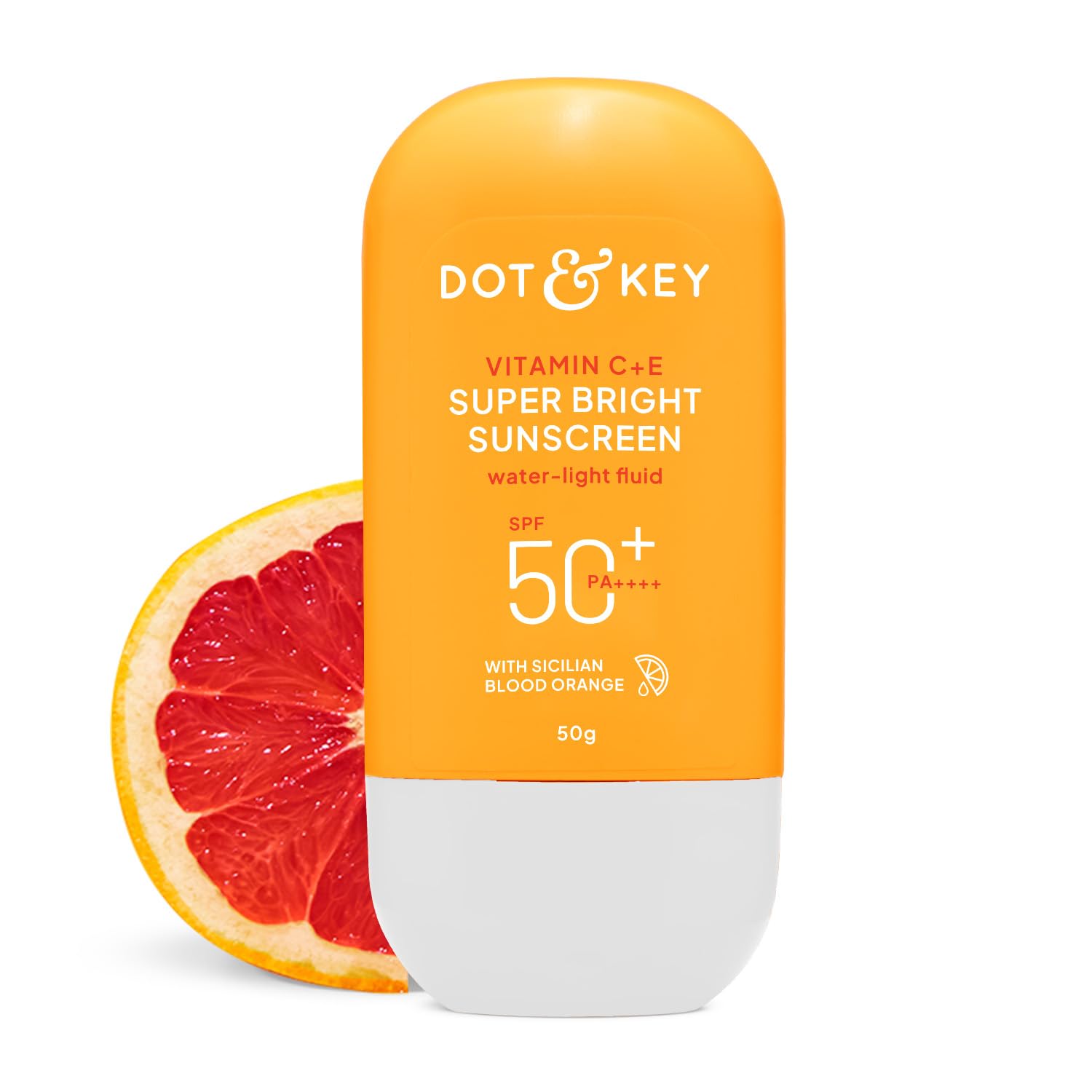
Vitamin C + E Super Bright Sunscreen SPF 50+ PA++++
Brightening sunscreen with modern broad-spectrum filters, ascorbyl glucoside and niacinamide.
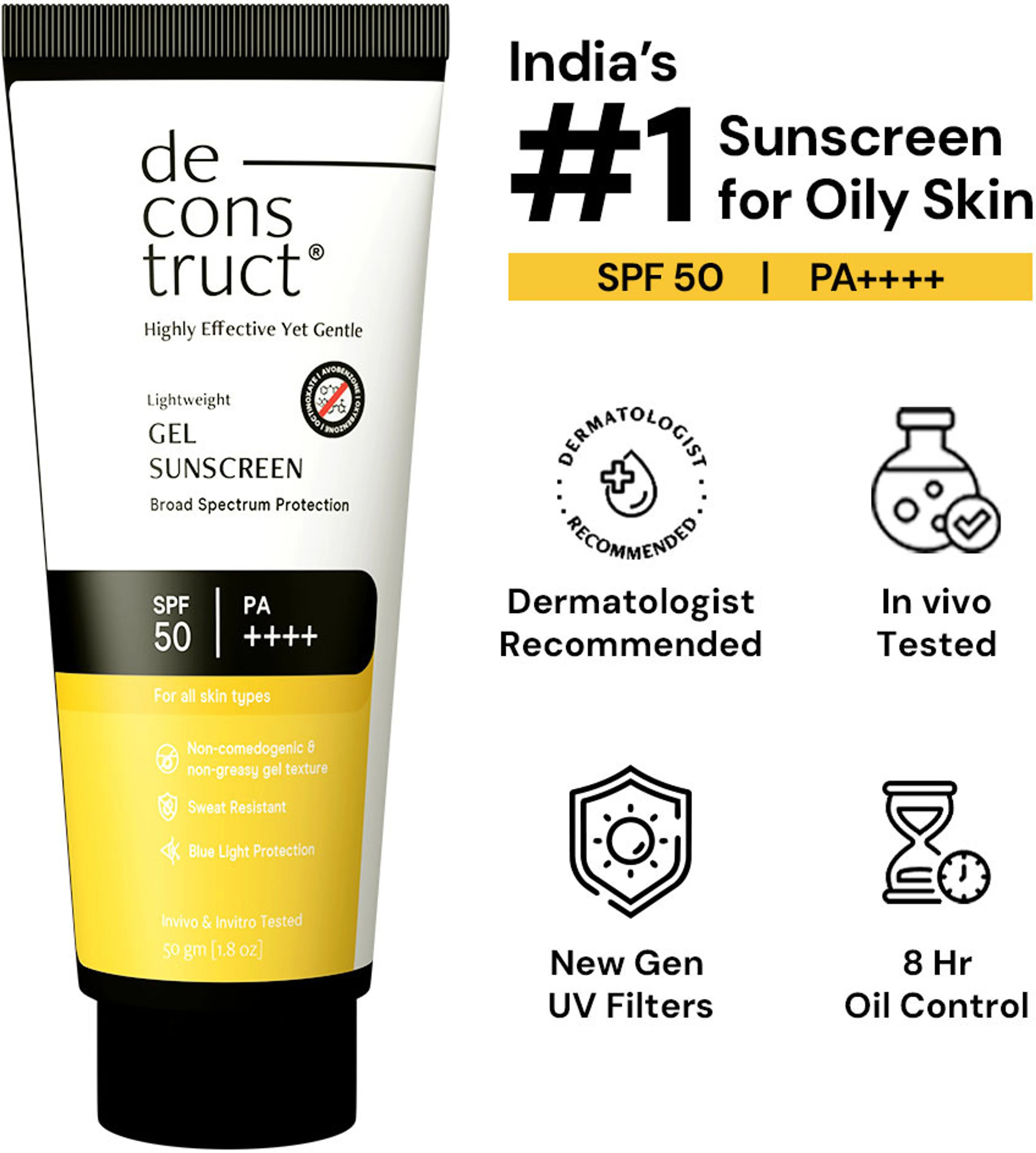
Gel Sunscreen SPF 50 PA++++
Lightweight gel sunscreen built around a modern, photo-stable filter system with no white cast.
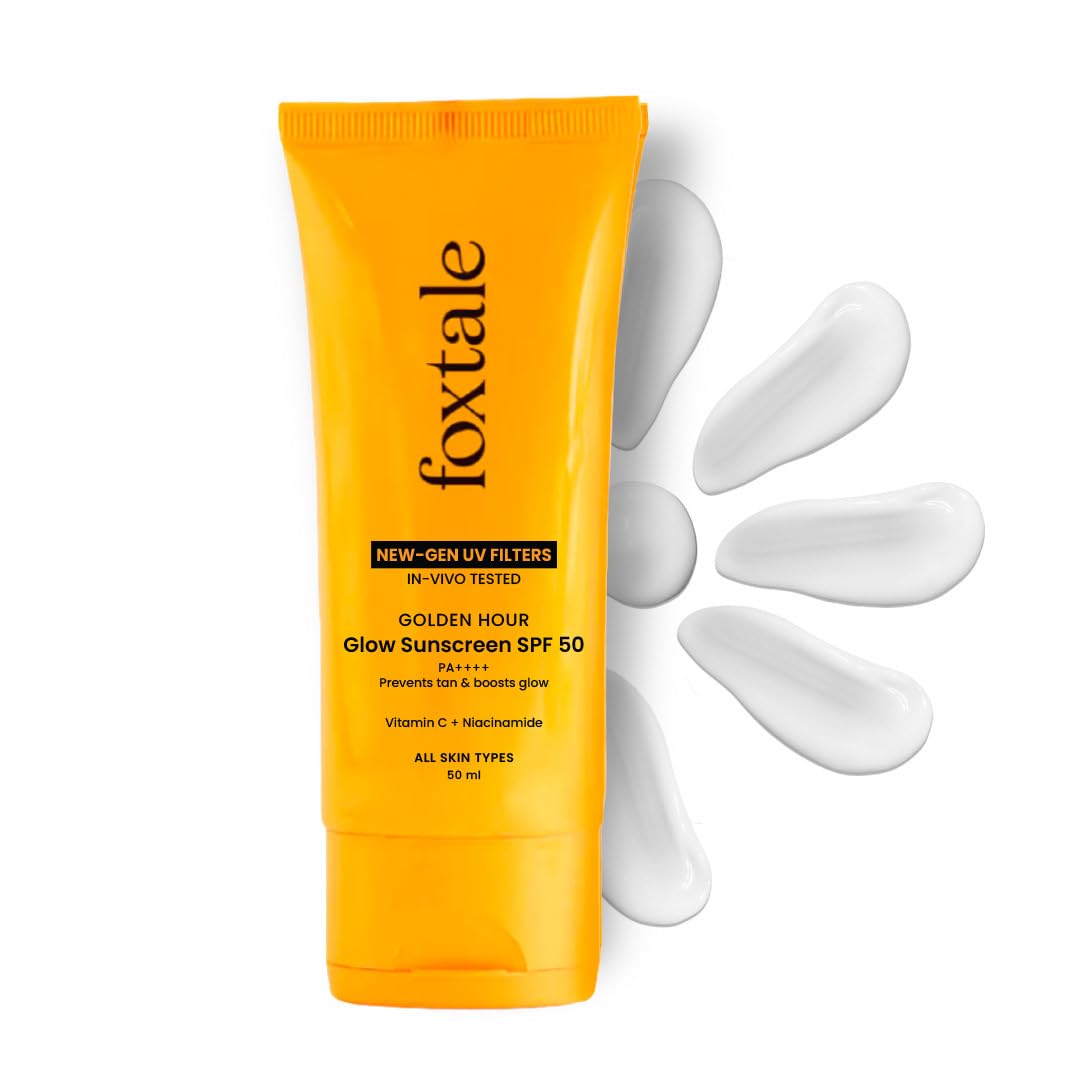
Glow Sunscreen SPF 50 PA++++ With Vitamin C & Niacinamide
Affordable lightweight sunscreen using only modern photostable filters, with ethyl ascorbic acid and niacinamide.
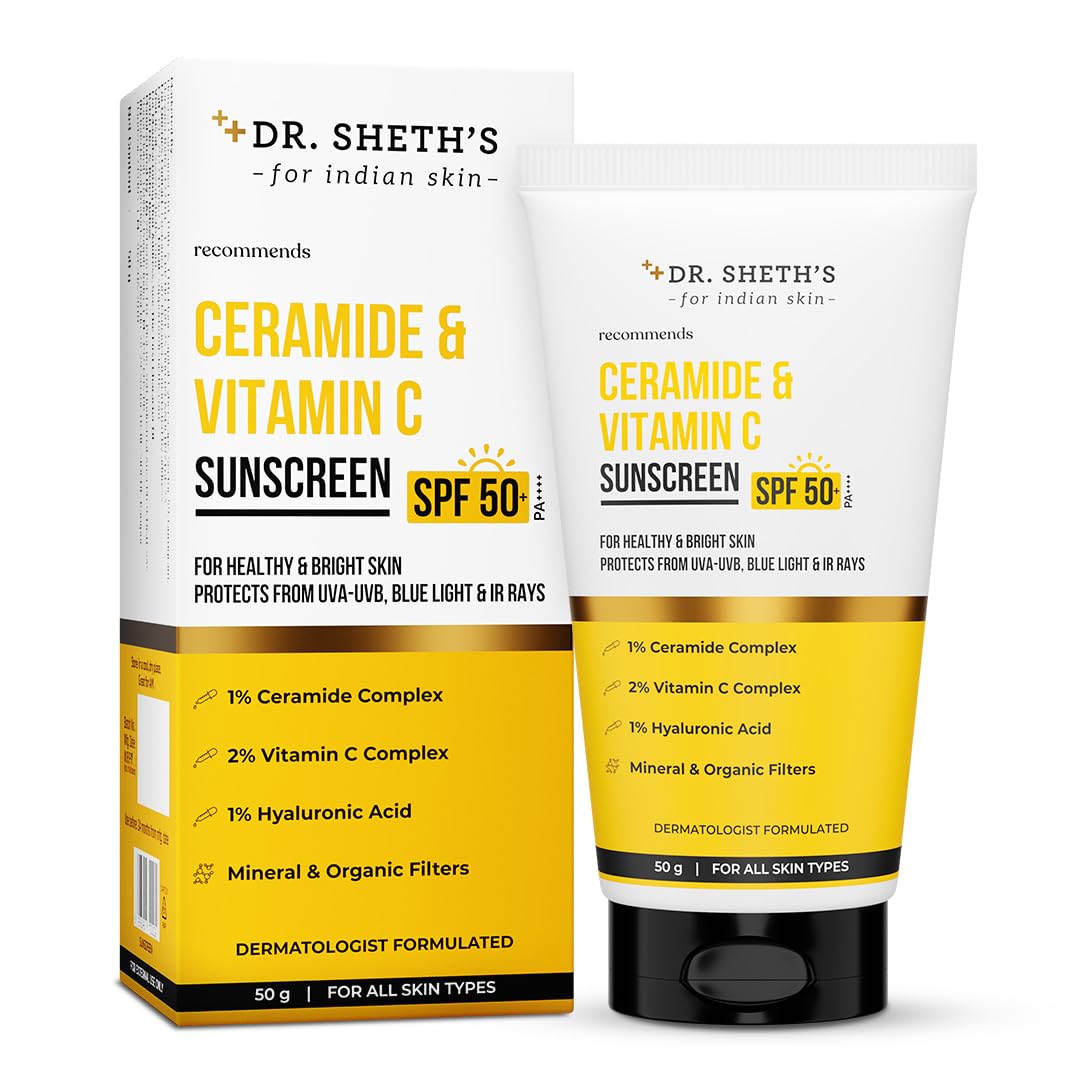
Ceramide & Vitamin C Sunscreen SPF 50+ PA++++
Barrier-focused hybrid sunscreen with five ceramides, hyaluronic acid, ethyl ascorbic acid and zinc oxide.
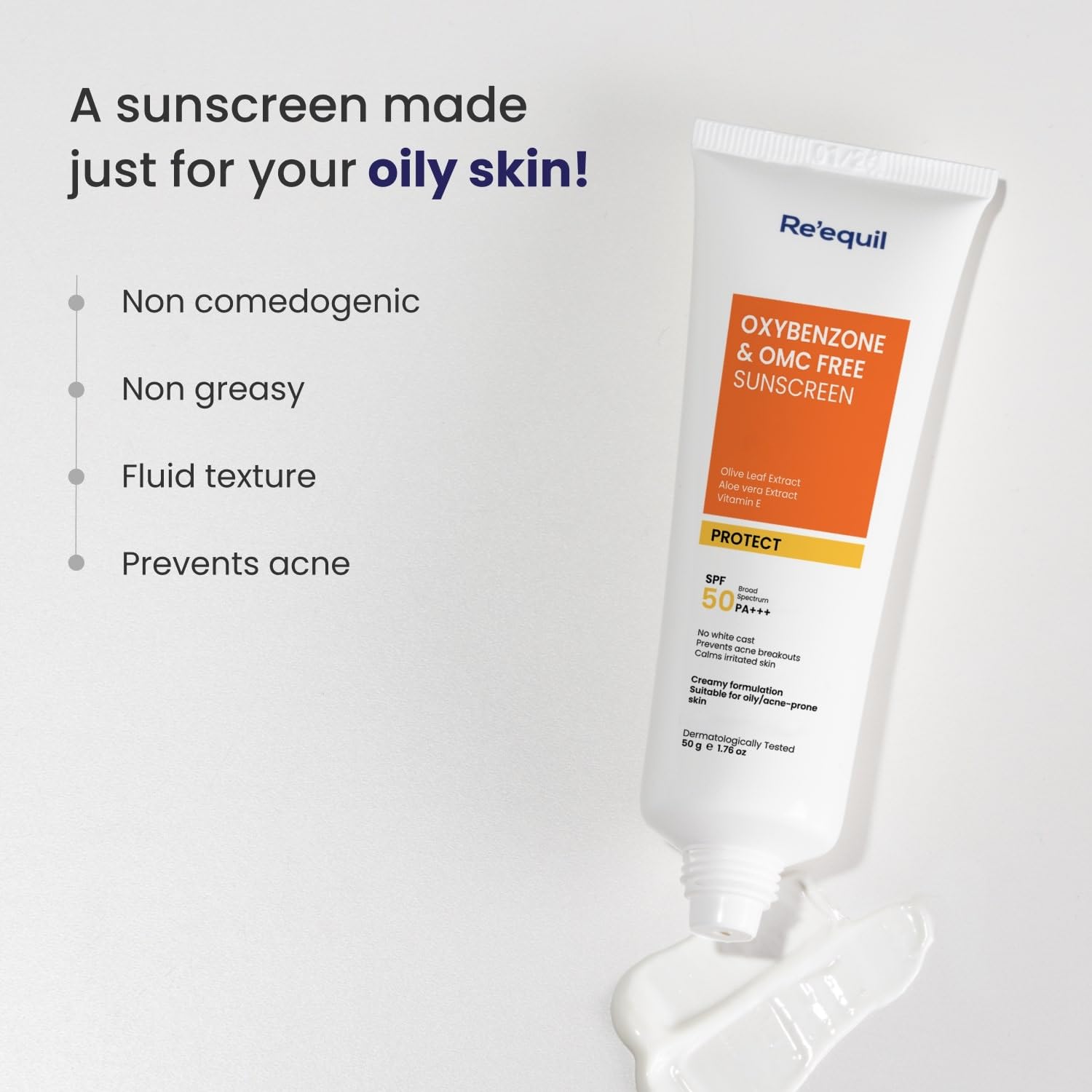
Oxybenzone & OMC Free Sunscreen SPF 50 PA+++
Cult-favourite Indian sunscreen built deliberately without oxybenzone, octinoxate (OMC) or avobenzone.
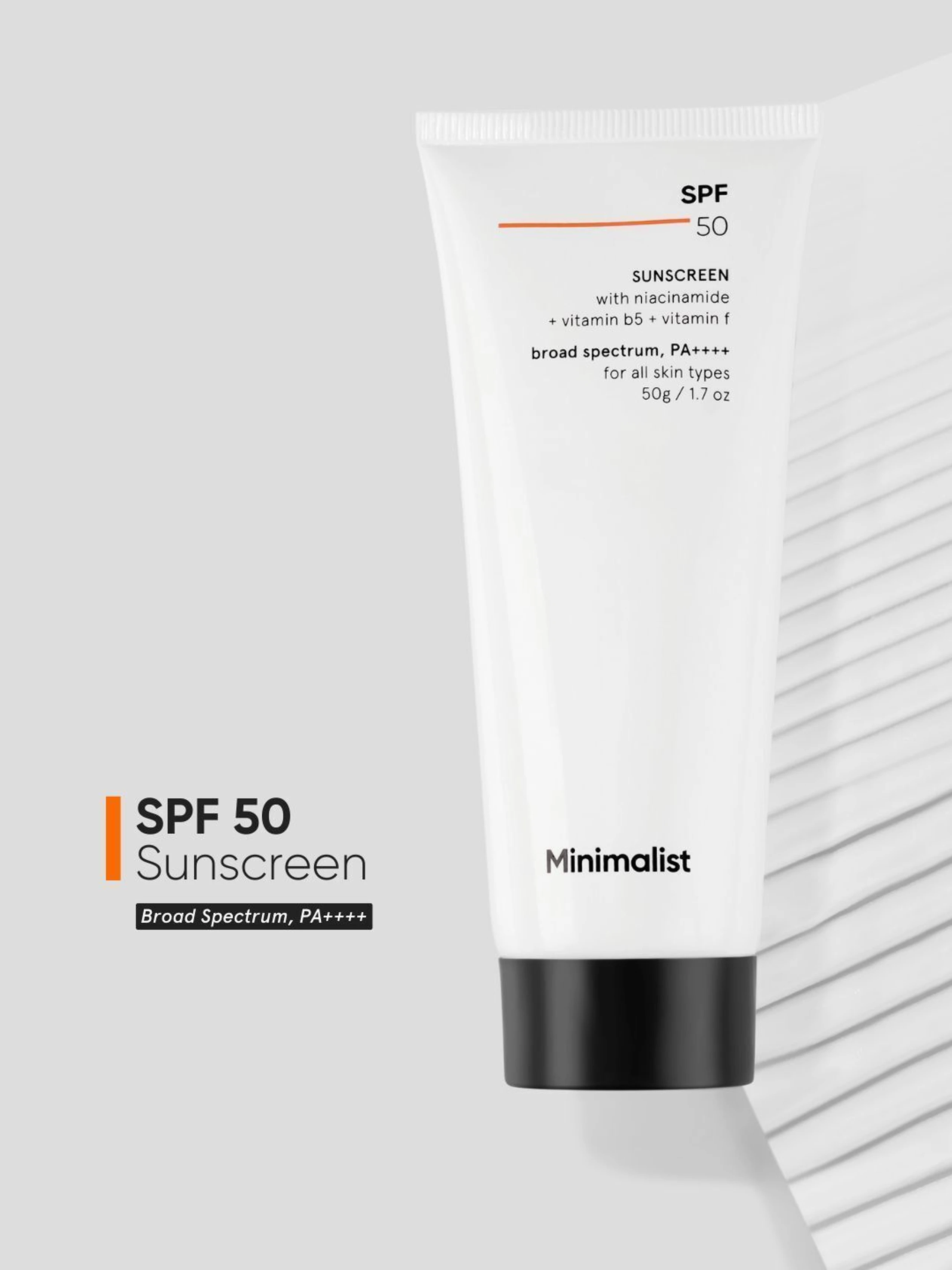
SPF 50 PA++++ Sunscreen With Multi-Vitamin
Hybrid sunscreen combining chemical filters with titanium dioxide, plus niacinamide and supporting actives.
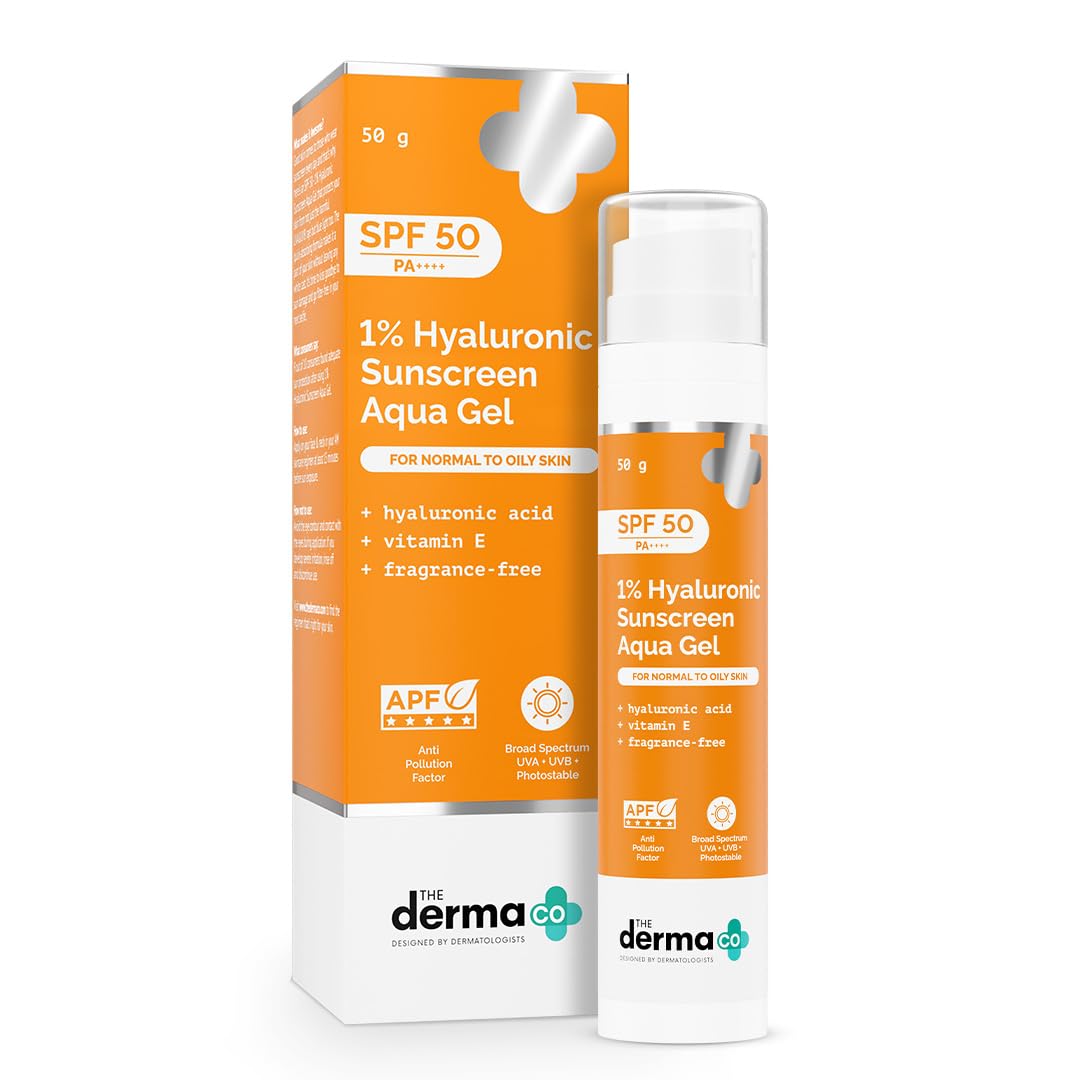
1% Hyaluronic Sunscreen Aqua Gel SPF 50 PA++++
Bestselling aqua-gel sunscreen featuring sodium hyaluronate and niacinamide alongside its UV filter system.
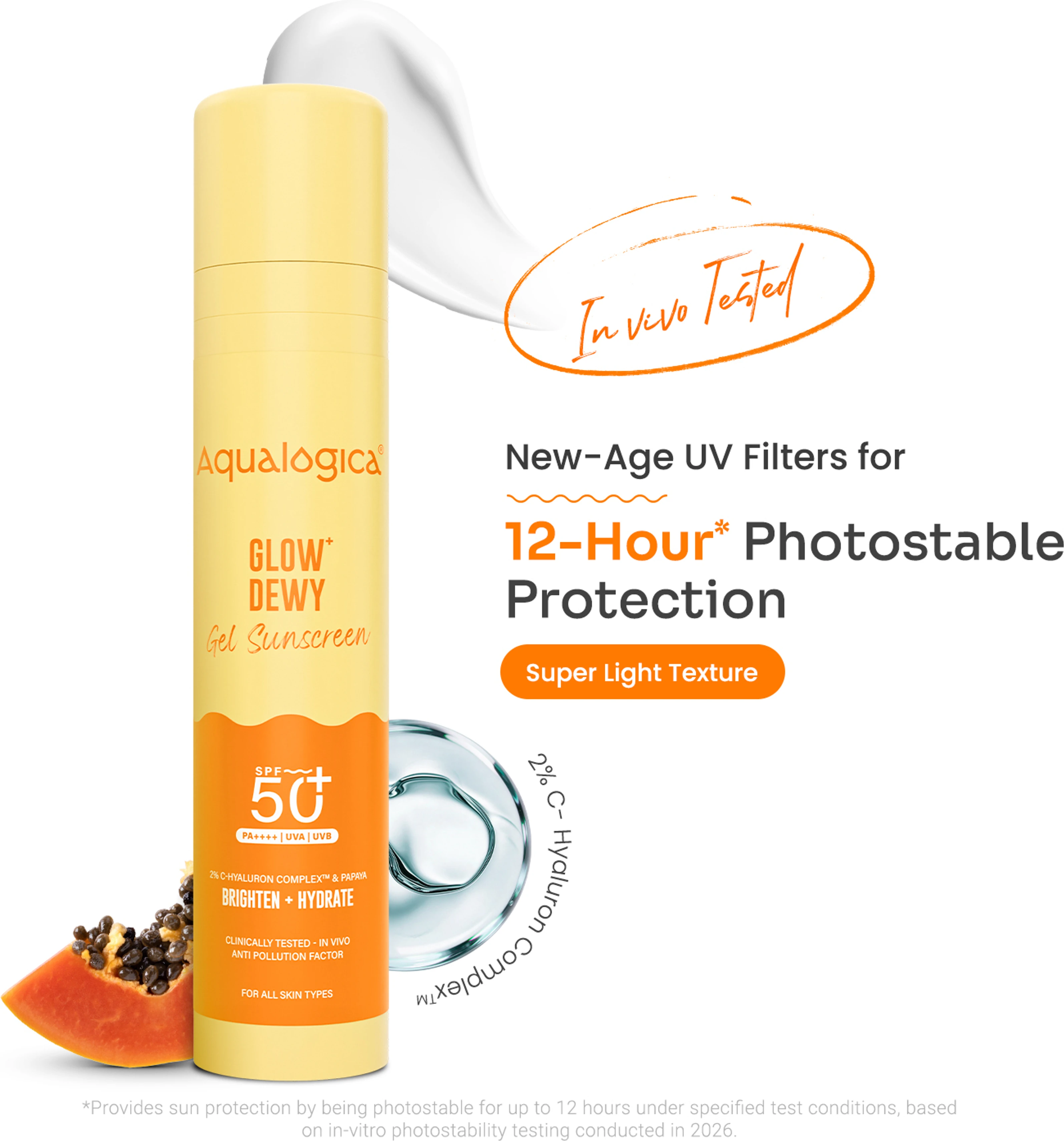
Glow+ Dewy Sunscreen SPF 50+ PA++++
Hydrating dewy-finish sunscreen with hyaluronic acid, ceramides, ethyl ascorbic acid and niacinamide.
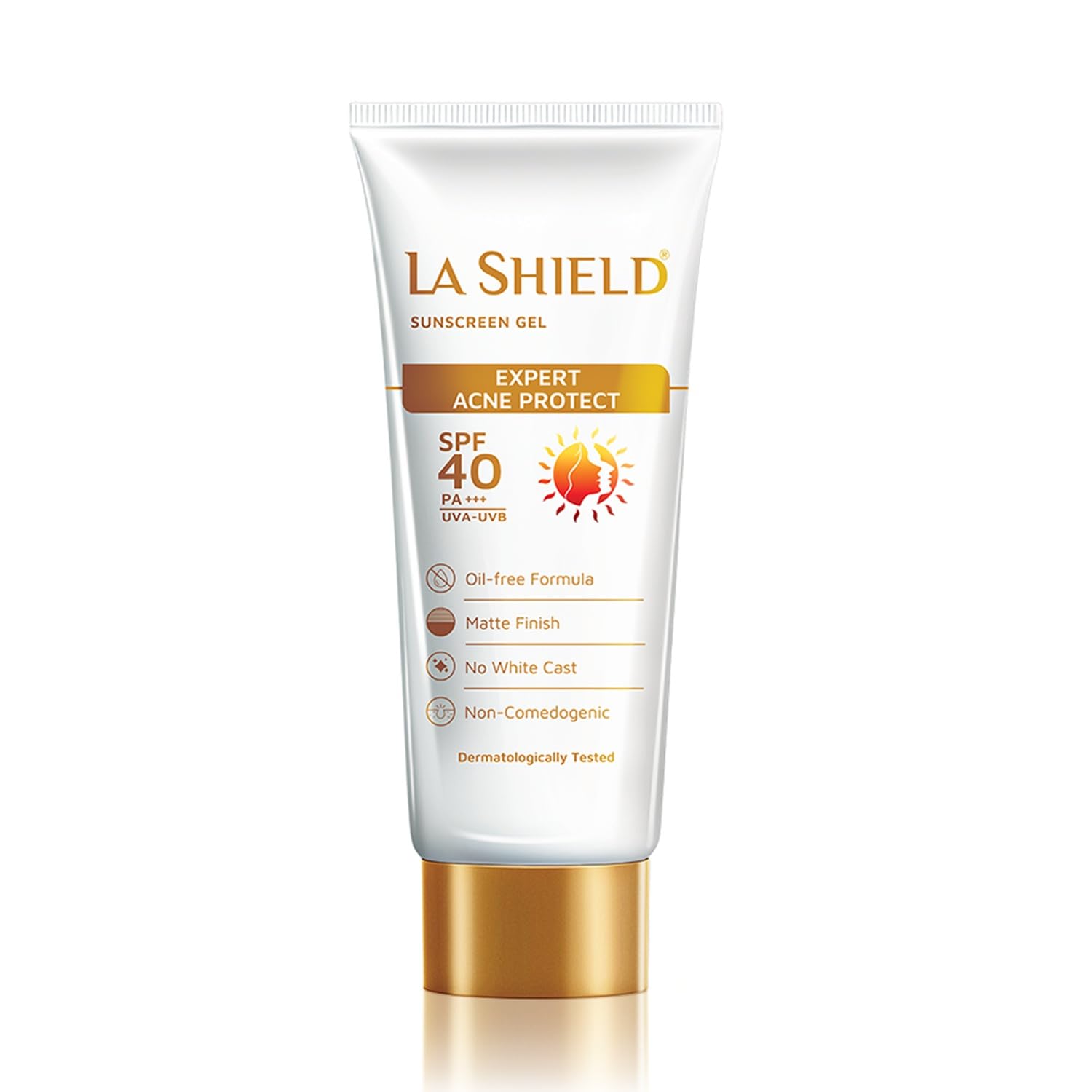
Mineral Sunscreen Gel SPF 40 PA+++
A long-standing dermatologist-recommended sunscreen — though despite the 'Mineral' branding, this is actually a hybrid formula.
Sources
- Practical recommendations for Indians on sunscreen use: a modified Delphi consensus by the Indian Sunscreen Forum (J Cosmet Dermatol, 2025)
- Sunscreens: a narrative review (Skin Health Dis, 2024)
- In vivo UVA protection factor across 38 SPF 50 and SPF 50+ sunscreens (Photodermatol Photoimmunol Photomed, 2026)
- Ultraviolet filters: dissecting current facts and myths (J Clin Med, 2024)
- Modernizing U.S. sunscreen regulations: how newer filters can improve public health (Photodermatol Photoimmunol Photomed, 2025)
- Bemotrizinol and the modernization of US sunscreen regulation (JAAD Int, 2026)
- Review of the safety of octocrylene used as an ultraviolet filter in cosmetics (J Eur Acad Dermatol Venereol, 2019)
- Photoprotection beyond ultraviolet radiation: a review of tinted sunscreens (J Am Acad Dermatol, 2021)
- How to apply sunscreen (American Academy of Dermatology)
- Sunscreen FAQs (American Academy of Dermatology)